Abstract

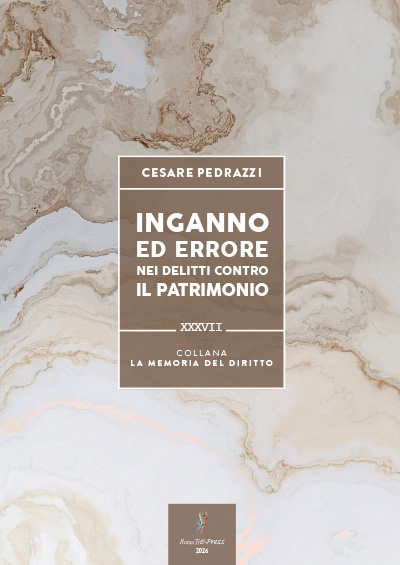
Il volume non è solo una trattazione in materia di truffa, costituendo piuttosto un ripensamento dell’intera sistematica dei delitti contro il patrimonio, il cui tratto essenziale è costituito dalla individuazione delle forme dell’offesa (i diversi “mezzi”) che connotano le varie figure di reato. Non soltanto un’opera capitale per il contributo fornito all’intelligenza delle singole fattispecie incriminatrici, ma anche – soprattutto – per l’apertura di nuove strade interpretative, che spaziano al di là dei confini della specifica ricerca: tornando al tema dei mezzi, ne vengono individuate le diversità, mentre, ben oltre i limiti del titolo XIII del codice penale, vengono investigati i criteri che decidono della unità o della pluralità di reati (unità di contesto e unità di lesione), così come il requisito dell’errore del disponente diviene occasione per affrontare l’arduo problema della causazione dell’errore nella prospettiva della causalità psicologica e la fonte dell’errore in quanto inganno fraudolento come influsso attuale sul convincimento della vittima.

This volume is not merely a discussion of fraud, but rather a rethinking of the entire system of property crimes, the essential feature of which is the identification of the forms of offense (the different "means") that characterize the various types of crime. This is not only a landmark work for its contribution to understanding the individual criminal offenses, but also—and above all—for opening up new interpretative avenues that extend beyond the confines of this specific research. Returning to the topic of means, its diversity is identified, while, well beyond the confines of Title XIII of the Italian Penal Code, the criteria that determine the unity or plurality of crimes (unity of context and unity of injury) are investigated. The requirement of error on the part of the person making the order provides an opportunity to address the challenging problem of the causation of error from the perspective of psychological causality, and the source of error as fraudulent deception and its current influence on the victim's belief.